

First Focus on Children is using data, research, and communal advocacy to fight potentially devastating funding and policy decisions by the White House and Congress that could undermine the nation’s early learning programs.
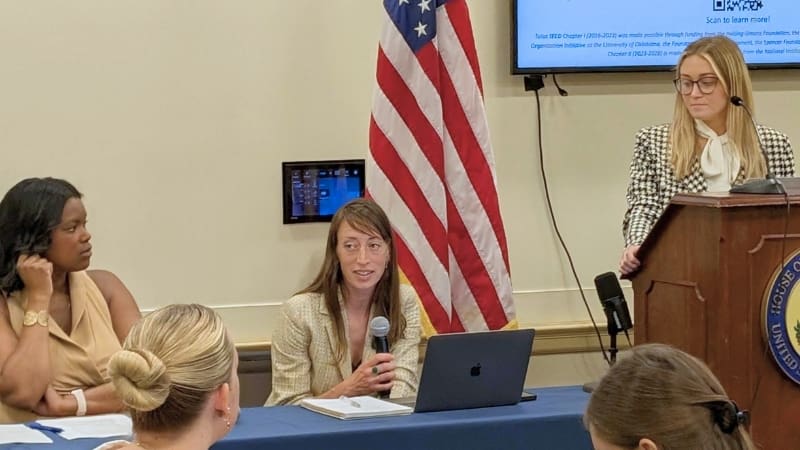
Researchers and academics joined First Focus on Children this month at a Capitol Hill briefing during Children’s Week, highlighting the extensive evidence that supports the positive impact of public investment in early learning programs and urging lawmakers to continue supporting early childhood education. A new issue brief from First Focus on Children — Research Confirms that Early Learning Investments Increase Benefits to Children, Lower Costs to Taxpayers — outlines the decades of evidence illustrating the role of early learning as an economic engine for children, families, and the country, and the deep need for public investment.
The positive long-term effects of early learning interventions are among the strongest in economics. In the 1960s and 1970s, researchers conducted multiple field experiments in which a group of children were randomly assigned to early learning programs, including both classroom education and home visiting that provided support to parents beyond the classroom. The researchers tracked the children into adulthood to monitor effects across a broad range of socioeconomic indicators. Many current studies, such as the School Experiences and Early Development (SEED) program in Tulsa, OK, are adding to that body of work. Georgetown University professor Anna Johnson leads the longitudinal study that began in 2016 with children before they attended the city’s universal pre-K program and presented her research to Congressional staff at the briefing. Researchers have found that students attending Tulsa’s universal pre-K exhibit better language and math skills through elementary school, and better executive function.
To discuss federal policy challenges at the briefing, Averi Pakulis from First Focus on Children and Casey Peeks from the Center for American Progress offered attendees a landscape of the current policy environment, including through the President’s FY2026 proposed budget and the reconciliation bills moving through Congress.
The President’s FY 2026 budget proposes flat funding for the Child Care and Development Block Grant (CCDBG) and Head Start, which amounts to a cut when accounting for inflation. These cuts mean fewer families will be served next year. This outcome is especially concerning given that only 13% of eligible families currently receive CCDBG assistance, and fewer than 26% have access to Head Start. The President’s proposal also would eliminate programs such as Preschool Development Grants and the Child Care Access Means Parents in Schools program, which help families access child care and improve the quality of early childhood programs. The U.S. child care system is already in crisis, with widespread affordability issues and severe shortages, and it urgently needs more support. Unfortunately, the President’s budget does not meet the level of investment that families need and deserve.
The budget reconciliation bills moving through the House and Senate would also harm families served by programs like CCDBG and Head Start. These bills propose more than $1 trillion in cuts to the Supplemental Nutrition Assistance Program (SNAP) and Medicaid. These cuts will make it harder for families to afford child care and exacerbate existing challenges in the system. Nearly one-third of child care professionals are insured by Medicaid, and 43% of early educator families use one or more public safety programs like Medicaid and SNAP to help with their health, nutrition, and other needs. The House and Senate bills include some changes to the tax credit designed to incentivize businesses to provide child care to their employees (45F); the Dependent Care Assistance Program; and the Child and Dependent Care Tax Credit, but these changes would not meaningfully help early educators or the families who most need it, address the cost of care, or build the supply of care.
The U.S. must establish an early childhood education system that is available to every child in every state, regardless of income, and must create a birth-through-5 education system that is high-quality for children, affordable for families, and provides livable compensation to workers. The evidence base behind investments in early learning more than makes the case for these programs and their future funding.